


Management of Tennis Elbow: Effective Solutions for Lateral Epicondylitis in Stygia
Discover the Tennis elbow management with our complete guide. Learn about lateral epicondylitis, symptoms, causes, effective treatments, and rehabilitation. Regain your well-being at Estigia Sports Medicine.
Introduction
Persistent pain on the outside of your elbow may be more than just an annoyance; it's often a sign of a condition known as tennis elbow, either lateral epicondylitisContrary to its name, it affects not only racket athletes, but anyone who performs repetitive movements of the forearm and wrist. If you've struggled with this condition, you know how limiting it can be for your daily activities, work, or sports.
At Estigia Sports Medicine, we understand the impact that tennis elbow can have on your quality of life. We are experts in the tennis elbow management, ofreciendo un enfoque integral y personalizado que va más allá del simple alivio del dolor. Nuestro objetivo es brindarte una solución duradera a través de un diagnóstico preciso, tratamientos avanzados y una rehabilitación efectiva. En esta guía completa, exploraremos qué es el tennis elbow, its causes, how it's diagnosed, and the various treatment and prevention strategies we offer at Estigia so you can say goodbye to pain and get back to doing what you love.
Table of Contents
- What is Tennis Elbow (Lateral Epicondylitis)?
- Causes and Risk Factors of Tennis Elbow
- Symptoms and Accurate Diagnosis in Stygia Sports Medicine
- The Stygian Approach: Your Path to Tennis Elbow Management
- Specific Treatments and Solutions in Stygia for Tennis Elbow
- Advanced Physiotherapy and Rehabilitation
- Ultrasound-guided Infiltrative Therapy
- Regenerative and Advanced Therapies
- Long-Term Prevention and Maintenance with Estigia
- Conclusion: Get Your Life Back with Estigia Sports Medicine
- Frequently Asked Questions
Don't let tennis elbow pain hold you back. Schedule your evaluation with the experts at Estigia today and begin your journey to recovery!
What is Tennis Elbow (Lateral Epicondylitis)?
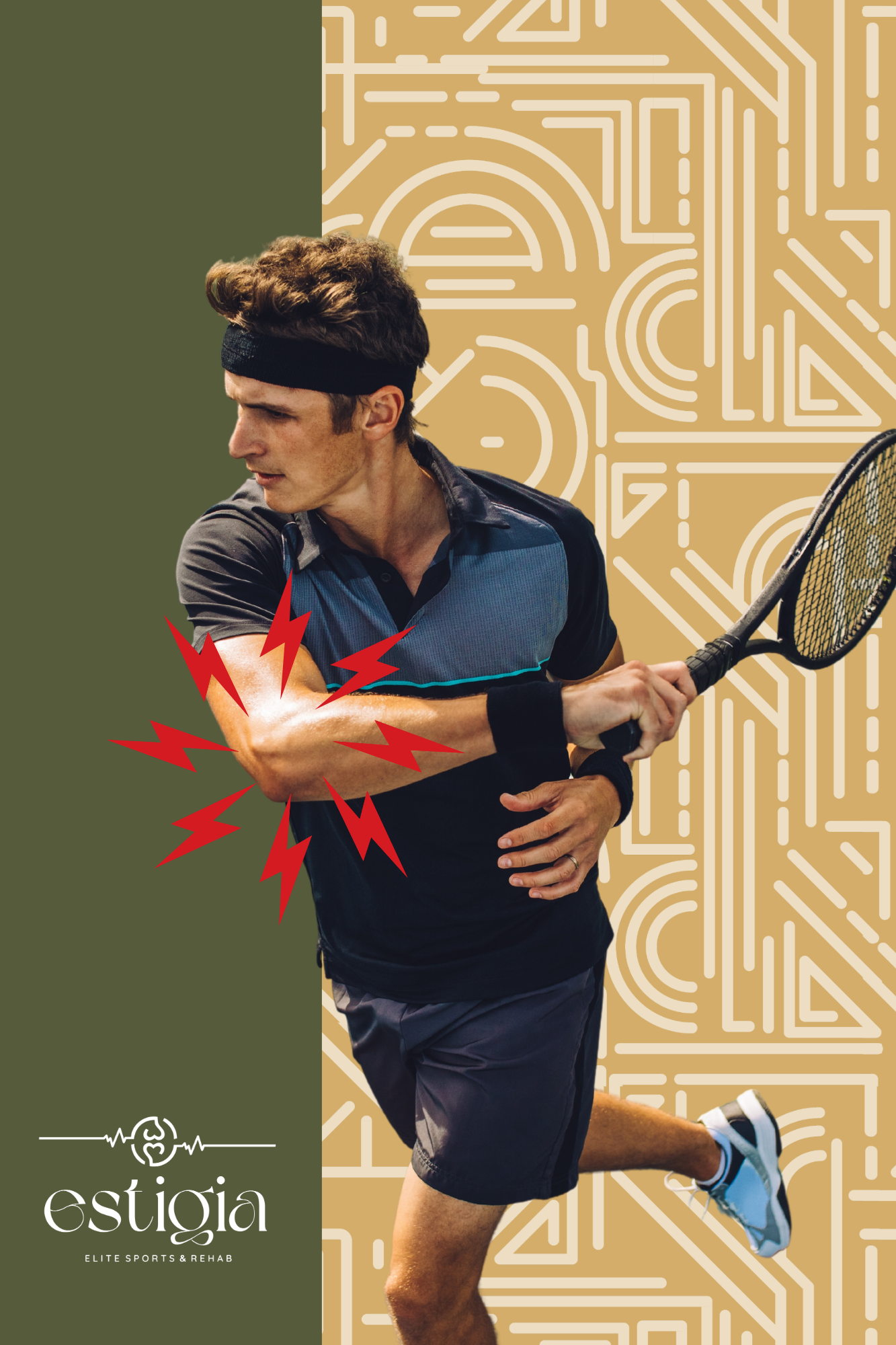
The tennis elbow, known medically as lateral epicondylitis, is a painful condition that affects the outer part of the elbow. It is characterized by inflammation or degeneration of the tendons that attach to the lateral epicondyle, a bony protrusion on the outside of the elbow. These tendons, primarily the extensor carpi radialis brevis, are responsible for extending the wrist and lifting the hand.
Pain on the outside of the elbow is the main symptom and usually worsens with gripping, wrist extension, or twisting movements of the forearm. What is tennis elbow? It is the first step to its proper tennis elbow management.
Don't let pain stop you. Contact us now and discover how Estigia Sports Medicine can transform your health. Schedule your appointment and take the first step toward recovery!
Consult with a Specialist
Causes and Risk Factors of Tennis Elbow
The causes of tennis elbow are intrinsically linked to overload and repetitive stress on the forearm tendons. Although it is associated with racquet sports, any activity that involves repetitive elbow movements can trigger it.
Some of the main factors include:
- Repetitive Activities: Overuse and repeated strain of the forearm extensor muscles, common in manual labor (carpentry, plumbing, gardening) or prolonged keyboard and mouse use.
- Specific Sports: Sports such as tennis, paddle tennis or squash, especially with bad sports techniques, unsuitable rackets or the use of heavy balls.
- Bad Techniques and Ergonomics: Incorrect posture, inefficient movements, or inappropriate tools can overload the tendons. ergonomics at work elbow is crucial to prevent this condition.
- Age: It is most common in people between 30 and 50 years old, although it can affect any age.
- Muscle Weakness: Lack of strength or flexibility in the forearm and shoulder muscles may increase the risk.
Symptoms and Accurate Diagnosis in Stygia Sports Medicine
The tennis elbow symptoms They vary in intensity, but usually include:
- Pain on the outside of the elbow: Often radiates to the forearm and wrist.
- Pain when lifting objects in the elbow: Especially when grabbing small objects.
- Grip weakness: Difficulty holding objects or performing everyday tasks.
- Pain when extending the wrist: Or when rotating the forearm.
The tennis elbow diagnosis At Estigia Sports Medicine, our examination is thorough and precise. Our specialists perform:
- Detailed Medical History: To understand your activities, pain history, and specific symptoms.
- Physical Examination: Including provocation tests to identify pain and weakness.
- Diagnostic Ultrasound: Essential for visualizing the condition of tendons and identifying inflammation, tears, or degeneration. At Estigia, ultrasound allows us to provide high-resolution, real-time diagnosis, accurately guiding the treatment plan.
- Biomechanical Gait Analysis (if applicable): Although less direct, problems in the upper or lower kinetic chain can influence elbow loading, especially in athletes.
In some cases, other options may be considered. tests for epicondylitis such as MRIs, although ultrasound is often sufficient for initial diagnosis and follow-up.
The Stygian Approach: Your Path to Tennis Elbow Management in Estigia
Sports Medicine, we understand that each patient is unique. Our approach to tennis elbow management It's comprehensive and completely personalized. We don't believe in one-size-fits-all solutions; therefore, we combine an accurate diagnosis with a treatment plan tailored to your specific needs, activity level, and goals.
Our specialist physicians and physical therapists work together to offer you multidisciplinary care that addresses not only the symptom, but the root of the problem. This includes everything from pain relief and inflammation reduction to full restoration of function and prevention of future relapses. Our commitment is to help you relieve tennis elbow and finally to cure tennis elbow, allowing you to resume your activities without limitations.
Specific Treatments and Solutions in Stygia for Tennis Elbow
At Estigia, we offer a full range of advanced treatments for the tennis elbow rehabilitation, adapted to each phase of your recovery:
Advanced Physiotherapy and Rehabilitation
Physiotherapy is the cornerstone of conservative treatment of tennis elbowOur highly qualified physical therapists use innovative techniques to:
- Tennis elbow exercises: Programs elbow muscle strengthening specific to the wrist and forearm extensors, starting with isometric exercises and progressing to resistance exercises.
- Stretches for epicondylitis: To improve flexibility and reduce tension in affected muscles and tendons.
- Manual Therapy Elbow: Including soft tissue mobilization, deep transverse massage, and myofascial release techniques to reduce tension and improve circulation.
- Advanced Technologies: Use of ultrasound for tendonitis, elbow electrostimulation and elbow laser therapy to reduce pain and inflammation, and promote tissue healing.
- Dry needling elbow: An effective technique for releasing trigger points and reducing muscle tension.
- Use of Support Devices: Recommendation and adjustment of tennis elbow brace or epicondylitis wrist brace para proporcionar soporte y reducir la tensión durante las actividades.
- Red Cord/Neurac Therapy: An advanced tool that allows for strength and stability training in suspension, crucial for neuromuscular re-education and stabilization of the arm-shoulder complex.
Ultrasound-guided Infiltrative Therapy
For cases where pain is persistent or inflammation is significant, our specialist doctors may recommend:
- Infiltrations for epicondylitis: Performed under ultrasound guidance for pinpoint precision. This allows the substance to be delivered directly to the affected area, maximizing effectiveness and minimizing side effects. They may include corticosteroids (to reduce acute inflammation) or elbow prolotherapy (to stimulate tissue regeneration).
- Platelet Rich Plasma (PRP) Elbow: A regenerative therapy that uses growth factors from the patient's own blood to accelerate tendon healing. Estigia is a leader in the precise application of PRP under ultrasound guidance to optimize results.
Regenerative and Advanced Therapies
In addition to PRP, Estigia offers other innovative options:
- Shock Waves Tennis Elbow: A non-invasive treatment that stimulates tissue healing and reduces chronic pain.
- Prescription of Physical Activity: Once the pain is controlled, a progressive plan is developed to safely return to daily and sports activities, avoiding relapses.
Ready to feel better?
Schedule your consultation today with Estigia Sports Medicine and put your recovery in expert hands.
Long-Term Prevention and Maintenance with Estigia
The tennis elbow prevention It's just as important as the treatment itself. At Estigia, we empower you with the tools and knowledge to prevent future relapses:
- Elbow Warm-Up Exercises: Appropriate routines before any physical activity.
- Preventive Elbow Strengthening: Maintain strength in your forearm and shoulder muscles.
- Ergonomics at Work Elbow and Correct Posture: Advice on adapting your work or sports environment, using appropriate sports equipment (such as rackets with the correct grip size) and adjusting the correct posture for activities.
- Correct Sports Technique: Evaluation and correction of technique in sports that may contribute to overload.
- Biomechanical Gait Analysis: To identify imbalances in the kinetic chain that may influence arm and elbow loading.
- Nutrition and Hydration: Tips for a tendon nutrition adequate to promote health and tissue recovery.
Our specialists will guide you through this process, creating a personalized maintenance plan that will allow you to enjoy an active, pain-free life in the long term.
Conclusion:Recover Your Life with Estigia Sports Medicine
The tennis elbow It doesn't have to be a chronic, limiting condition. With Estigia Sports Medicine's comprehensive and expert approach, you can expect a significant and lasting recovery. From an accurate diagnosis using advanced technology like ultrasound, to personalized treatments that combine advanced physical therapy, regenerative therapies, and ultrasound-guided infiltrations, we're here to guide you every step of the way.
Our commitment is to help you relieve tennis elbow, regain your strength and mobility, and empower yourself to prevent future injuries. At Estigia, your health and well-being are our priority.
Don't wait for the pain to worsen. Take control of your recovery and optimize your health with a personalized plan at Estigia Sports Medicine. Schedule your appointment today!
Frequently Asked Questions About Tennis Elbow
- How long does tennis elbow last? The duration of the tennis elbow It varies depending on the severity and response to treatment, but with proper management, many patients experience significant improvement within weeks or months. The key is adherence to the rehabilitation plan and activity modification.
- What is the difference between tennis elbow and golfer's elbow? Both are types of epicondylitis, but tennis elbow (lateral epicondylitis) causes pain on the outside of the elbow, affecting the extensor tendons. The golfer's elbow (medial epicondylitis) causes pain on the inside of the elbow, affecting the flexor tendons. At Estigia, we diagnose and treat both conditions.
- Can I continue exercising with tennis elbow? It depends on the severity of the pain and the type of exercise. Generally, it's recommended to modify or avoid activities that exacerbate the pain. Our specialists at Estigia will guide you on which activities are safe and how to adapt your exercise routine during recovery.
- Do elbow pads really help with tennis elbow? Yes, they do. specific elbow pads or bracelets for tennis elbow They can be very helpful by distributing pressure over the forearm muscles, reducing tension on the affected tendons and providing temporary pain relief during activities.
- Do home remedies work for tennis elbow? While ice or some gentle stretching may offer temporary relief, home remedies alone are rarely enough to resolve the problem. tennis elbow lastingly. An accurate diagnosis and a professional treatment plan are essential for a full recovery.
Contact and Appointments at Estigia Sports Medicine. Your health is our priority. Contact us to schedule your consultation and take the first step toward a full recovery.
Explore More of Our Services
Learn more about what we offer for your well-being and performance:
- Diagnosis and Sports Medicine: Do you need to better understand your body or recover from an injury? Discover how we can help you with a comprehensive and personalized approach.
- Physiotherapy and RehabilitationAre you recovering from an injury or looking to optimize your movement? Here you'll find the support and therapies you need to regain function and well-being.
- ErgoLab: Performance Evaluation: Do you want to discover your full potential? Our lab offers precise assessments to improve your performance.
- Redcord System: Muscle Activation: Strengthen your body intelligently and effectively. Learn how this innovative technique can transform your strength and stability.
- Regenerative Therapies, Nutrition and Psychology: A holistic approach to your health. Explore how these disciplines come together to enhance your recovery and overall well-being.
Thank you for sharing such valuable information.
Gracias a ustedes por seguinos.